

Have you ever known that going for a walk would probably make you feel better, but found yourself staying on the sofa instead? Or perhaps you've been meaning to book a therapy appointment, reply to a message or have an important conversation, but keep telling yourself you'll do it another day. Maybe you've noticed that the longer you put something off, the harder it becomes to actually do it.
The interesting thing is that we often know these activities could be good for us. We might even really want to do them.
So why do we avoid them?
Psychology offers some useful explanations.
Avoidance is not always about being lazy, unmotivated or lacking self-discipline. Sometimes, it's our mind's way of trying to protect us from feelings we would rather not experience. Understanding why we avoid certain situations can help us recognise patterns in our behaviour and begin making small changes.

What Is Avoidance in Psychology?
Avoidance is when we move away from situations, activities, thoughts or feelings that we anticipate might be uncomfortable, stressful or upsetting. Sometimes this is helpful. Avoiding genuinely dangerous situations is an important part of keeping ourselves safe.
But avoidance can also become a habit in situations that aren't necessarily dangerous.
For example, you might avoid going to the gym because you're worried about being judged. You might put off checking your bank account because you're anxious about what you'll find. Or you might avoid meeting friends because you're feeling low and don't have the energy to make conversation.
In each situation, avoiding the activity may provide some immediate relief. The difficulty is that this relief can make us more likely to avoid the same situation again.
Over time, we can find ourselves moving further away from activities, relationships or experiences that might actually improve our wellbeing.
Why Does Avoidance Feel So Good in the Moment?
One of the most interesting things about avoidance is that it often works.
At least temporarily.
Imagine you've been putting off making an important phone call. Every time you think about it, you feel anxious. You start imagining an awkward conversation, worrying about what the other person might say or wondering whether you'll know how to respond. Eventually, you decide to leave it until tomorrow.
Almost immediately, you feel relieved.
The uncomfortable feeling has reduced, and you can get on with your day.
In psychology, this is explained through a process called negative reinforcement.
Despite its name, negative reinforcement doesn't mean something bad is happening. It describes how a behaviour becomes more likely when it removes or reduces something unpleasant.
In this example, avoiding the phone call reduces your anxiety. Your brain begins to learn that putting things off is an effective way of feeling better. The next time you think about making that call, avoiding it may become even more tempting.
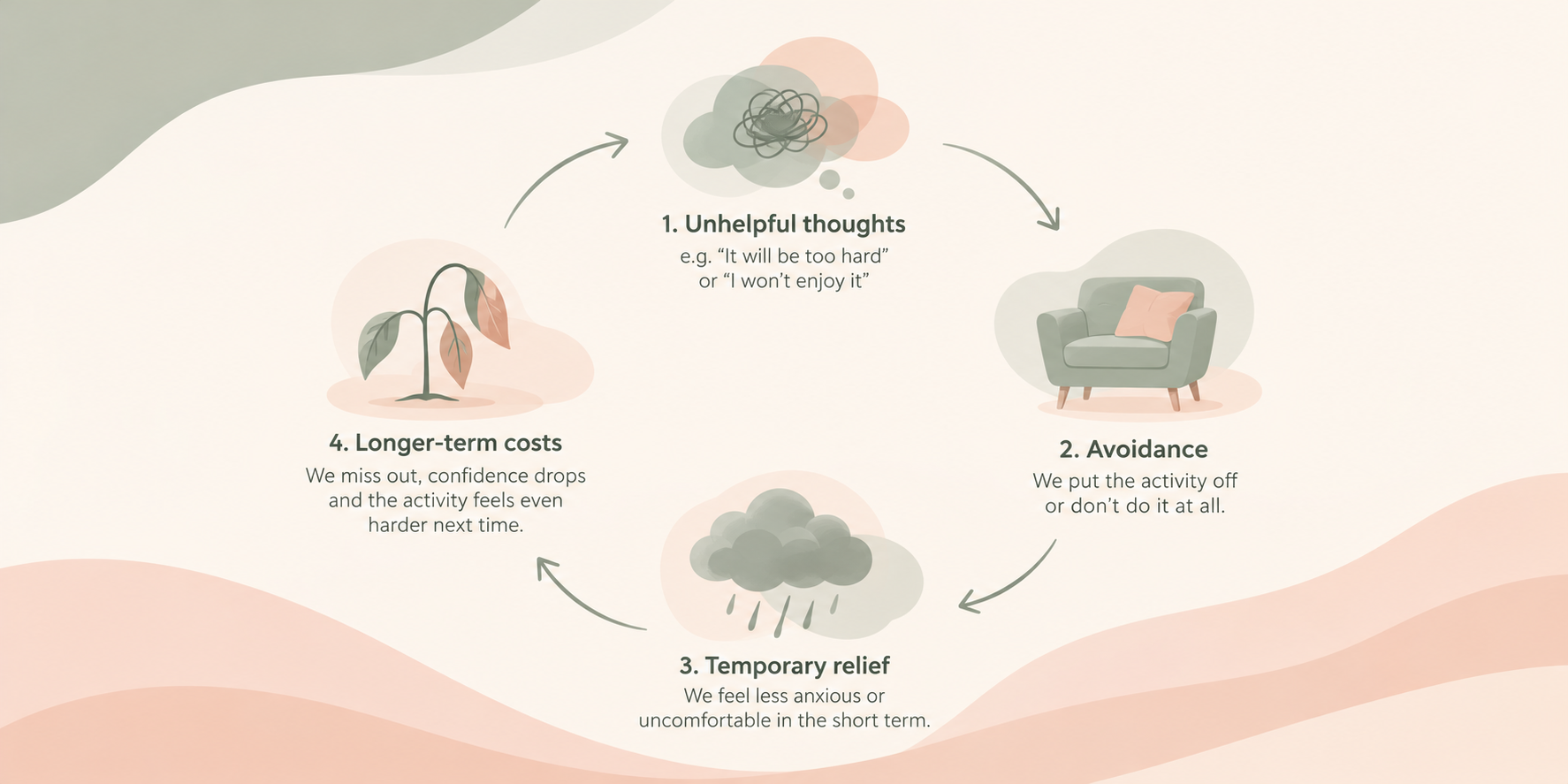
This can create what psychologists call an avoidance cycle.
Something makes us uncomfortable, we avoid it, we experience relief, and that relief reinforces the avoidance. The problem is that the original situation hasn't necessarily changed.
And sometimes, the longer we avoid something, the more difficult it begins to feel.
What Are Some Everyday Examples of Avoidance?
Avoidance doesn't always look like refusing to do something.
Sometimes it appears in small, everyday behaviours that we barely notice.
You might recognise some of these examples.
Avoiding exercise
You know that moving your body often helps your mood, but the thought of getting changed, leaving the house or being around other people feels overwhelming.
Avoiding social plans
You miss your friends and want to feel more connected, but you keep cancelling because you're worried about being tired, awkward or not having much to say.
Avoiding difficult conversations
Something has been bothering you in a relationship, but you don't want to create conflict, so you convince yourself it isn't worth mentioning.
Avoiding therapy
You've been thinking about speaking to someone for months, but the idea of opening up to a stranger or talking about difficult experiences makes you nervous.
Avoiding everyday responsibilities
You put off answering emails, dealing with paperwork or checking your finances because thinking about them makes you feel stressed.
Avoiding trying something new
You'd love to start a new hobby, apply for a job or meet new people, but you're worried about making mistakes or feeling embarrassed.
What these examples have in common is that the activity itself isn't necessarily something we don't want.
Often, it's the feelings we associate with doing it that we're trying to avoid.
Why Do We Sometimes Wait Until We Feel Ready?
Have you ever told yourself that you'll start doing something when you feel a little better?
Perhaps you've thought:
I'll start exercising when I have more energy.
I'll see my friends when I'm feeling more confident.
I'll book therapy when things have calmed down.
I'll deal with that problem when I'm less anxious.
It's understandable to want to feel ready before doing something difficult. But sometimes, waiting for motivation or confidence to arrive can keep us stuck.
One psychological approach that explores this is called Behavioural Activation.
Behavioural Activation is commonly used in the treatment of depression and focuses on helping people gradually reconnect with activities that provide enjoyment, meaning or a sense of achievement.
When we're feeling low, we often withdraw from activities. We might stop seeing friends, exercising, spending time outdoors or doing things we previously enjoyed. Unfortunately, withdrawing from these activities can also mean losing some of the experiences that support our mood.
This can create another cycle: we feel low, do less, have fewer opportunities for enjoyment or achievement, and begin feeling even lower.
Behavioural Activation helps people gradually interrupt this pattern by identifying small, manageable activities and building them back into everyday life.
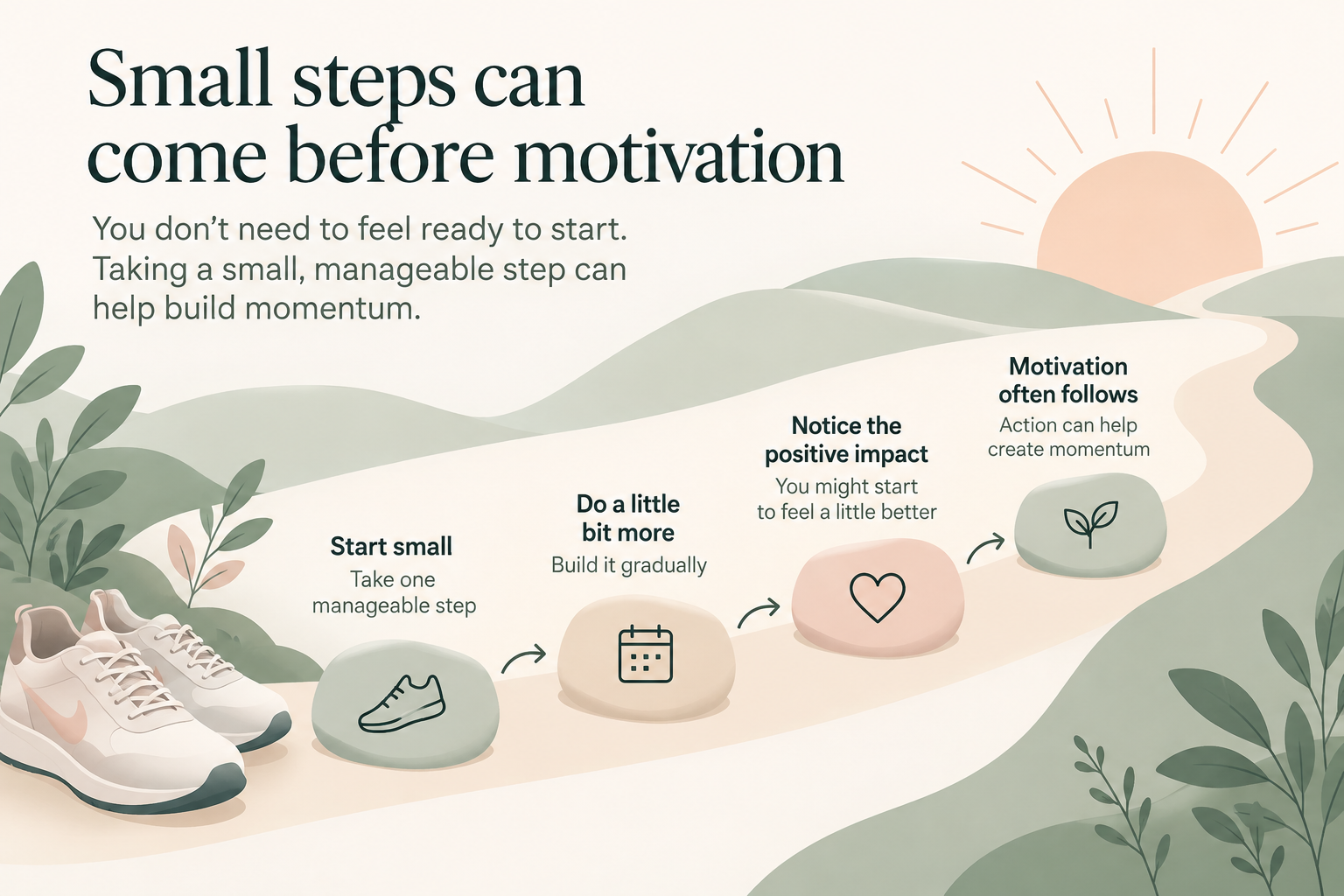
The important idea is that we don't always need to feel motivated before taking action. Sometimes, motivation begins to develop after we've started.
For example, you might not feel like going for a walk, but notice that being outside improves your mood.
You might feel nervous about meeting a friend, but appreciate the connection afterwards.
Or you might feel apprehensive about your first therapy session, but find that talking to someone is less intimidating than you expected.
This doesn't mean forcing yourself to do things when you're exhausted or unwell.
It's about recognising that sometimes a small action can help us begin moving towards feeling better.
What Is Experiential Avoidance?
Another useful concept comes from Acceptance and Commitment Therapy, often called ACT. ACT explores how we respond to uncomfortable thoughts and feelings and how these responses can influence our behaviour.
One concept within ACT is called experiential avoidance.
This describes attempts to escape, suppress or control unwanted internal experiences, such as anxiety, sadness, uncertainty or difficult memories, even when doing so creates problems in the longer term.
For example, imagine someone who really values their friendships but experiences social anxiety. They want to feel connected to others, but social situations make them uncomfortable. To avoid that anxiety, they begin declining invitations. Initially, staying at home feels safer. But over time, they may begin feeling increasingly isolated.
The behaviour that helped them avoid anxiety has also moved them further away from something important to them.
Or imagine someone who wants to feel healthier but avoids medical appointments because they're frightened about what they might discover. Avoiding the appointment reduces their worry temporarily, but it may also prevent them from getting the information or support they need.
ACT encourages us to think about whether our responses to uncomfortable feelings are helping us move towards or away from the things that matter to us.
This is connected to a concept called psychological flexibility.
Psychological flexibility involves being able to recognise and make room for difficult thoughts and emotions while still choosing actions that are consistent with our values and circumstances.
The goal isn't to eliminate uncomfortable feelings.
It's to develop a different relationship with them, so they don't always determine what we do next.
Why Can Avoidance Become Worse When We're Stressed or Overwhelmed?
Avoidance can become particularly noticeable during periods of stress, anxiety, low mood or emotional exhaustion.
When we're already managing a lot, even relatively small tasks can begin to feel demanding. Something that might ordinarily take ten minutes can suddenly feel like an enormous effort.
For example, replying to a message might involve deciding what to say, worrying about how it will be received and feeling pressure to continue a conversation. Going to the gym might involve planning when to go, getting ready, travelling there and managing the social environment. Booking a therapy appointment might involve acknowledging that something has been difficult and making a decision about asking for support.
When our emotional or cognitive resources are already stretched, these additional demands can feel harder to manage.
It's also important to recognise that not all avoidance is driven by anxiety. Difficulties with executive functioning, attention, depression, chronic illness, fatigue or burnout can make starting and completing activities genuinely difficult.
Sometimes, what looks like avoidance from the outside is actually a person struggling with their available energy, capacity or circumstances.
Understanding the reason behind the behaviour is therefore much more helpful than simply telling someone to try harder.
How Can You Start Breaking the Avoidance Cycle?
Recognising avoidance is often the first step towards changing it.
You don't need to make dramatic changes or force yourself into situations that feel overwhelming.
Small, manageable adjustments can help you begin responding differently.
1. Notice what you're actually avoiding
The next time you find yourself putting something off, try asking yourself what feels difficult about it.
Are you worried about failing?
Are you frightened of being judged?
Does the activity feel overwhelming?
Are you exhausted, or are you worried about how you'll feel once you begin?
Sometimes, identifying the feeling underneath the avoidance can help you understand why starting feels so difficult.
2. Make the first step smaller
One of the reasons we avoid things is that we imagine the entire task rather than the first step.
If going to the gym feels overwhelming, perhaps your first step is simply putting on your trainers.
If starting therapy feels daunting, perhaps you begin by reading about how therapy works.
If dealing with your finances feels stressful, perhaps you start by opening your banking app.
The aim isn't necessarily to complete everything immediately.
It's to make the starting point manageable enough that you can begin.
3. Stop waiting to feel completely ready
It's natural to want anxiety, uncertainty or discomfort to disappear before doing something challenging.
But sometimes those feelings only begin to change once we have new experiences.
You might still feel nervous before making that phone call.
You might still feel uncertain before attending your first therapy session.
And you might still feel unmotivated before going outside.
That doesn't automatically mean you need to wait.
When it is safe and manageable, taking a small step while feeling uncomfortable can help you discover that the situation is something you can cope with.
4. Think about what matters to you
Rather than focusing only on the feeling you're trying to avoid, consider what you would like to move towards.
Perhaps you value your friendships, but you've been withdrawing socially.
Perhaps you value your wellbeing, but you've been putting off seeking support.
Or perhaps you value learning and personal growth, but fear of making mistakes has stopped you trying something new.
You might ask yourself:
Is avoiding this helping me move towards the life I want, or further away from it?
There isn't always a simple answer, but the question can help you recognise when short-term relief is coming at a longer-term cost.
5. Be compassionate with yourself
Changing avoidance patterns isn't always easy.
Sometimes the things we avoid are connected to longstanding fears, difficult experiences or periods when we've felt overwhelmed.
And sometimes, we genuinely need rest, practical help or a change in our circumstances rather than another task to complete.
Try to approach your behaviour with curiosity rather than criticism.
Instead of asking why you can't just get on with something, consider what might make it feel more manageable.
Progress might involve taking one small step, asking someone for support or recognising that you need to approach the situation differently.
Small changes still count.

How Can Therapy Help With Avoidance?
You don't need to wait until avoidance is significantly affecting your life before exploring it in therapy.
Therapy can provide a confidential space to understand why certain situations, emotions or experiences feel difficult to approach.
Perhaps you regularly put off important conversations because you're frightened of conflict.
Maybe you've gradually withdrawn from social activities because of anxiety.
You might find yourself procrastinating when tasks feel overwhelming, or notice that you avoid thinking about experiences that have been upsetting.
Sometimes, you may not even be sure what you're avoiding or why.
A therapist can help you identify patterns, understand the emotions associated with them and explore different ways of responding. Approaches such as Cognitive Behavioural Therapy (CBT), Behavioural Activation and Acceptance and Commitment Therapy (ACT) can be particularly relevant, depending on your individual needs. For example, CBT may help you explore the relationship between your thoughts, feelings and behaviours.
Behavioural Activation may support you to gradually reconnect with meaningful or enjoyable activities.
ACT may help you develop greater psychological flexibility and take steps towards what matters to you, even when uncomfortable emotions are present.
The aim isn't to push you into situations before you're ready.
It's to help you develop the understanding, confidence and strategies needed to make choices that support your wellbeing.
Understanding Why We Avoid Things
Avoidance is something many of us experience. We put off conversations, delay decisions, cancel plans or tell ourselves we'll start something when life feels a little easier.
Often, these behaviours make sense when we understand the feelings behind them.
Our minds are trying to help us manage discomfort, uncertainty or stress. But sometimes, the strategies that help us feel better in the moment can also keep us feeling stuck.
Understanding avoidance isn't about criticising yourself for the things you haven't done.
It's about becoming curious about what happens when something feels difficult and recognising that you may have more options than simply pushing through or avoiding it altogether.
You don't need to change everything at once.
You don't need to feel completely confident.
And you don't need to wait until you have everything figured out.
Sometimes, the first step is simply noticing the pattern.
At Hive Wellness, we understand that reaching out for support can sometimes be one of the very things people find themselves putting off. That's why we focus on matching you with a qualified therapist based on your individual needs and preferences, rather than simply asking you to choose someone from a directory.
Whether you're experiencing anxiety, procrastination, low mood, difficulties with relationships or a feeling of being stuck, therapy can provide the space to explore what's happening and begin finding a way forward.
If you're ready to take that first step, Hive Wellness is here to help.
Further Reading
For readers who would like to explore the psychological research behind this article:
Sirois & Pychyl (2013) — Procrastination and the Priority of Short-Term Mood Regulation. Explores procrastination as a way of regulating uncomfortable emotions.
NICE (2022) — Depression in Adults: Treatment and Management. Includes Behavioural Activation among recommended psychological treatments.
Hayes et al. (2006) — Acceptance and Commitment Therapy: Model, Processes and Outcomes. Explores experiential avoidance and psychological flexibility.

Get matched with a trauma specialist
Five minutes now, a match usually within 24 hours.
No pressure, no deadline.
Dr Holly Milmine
DEdPsy, MSc, MA