

Everyone experiences difficult emotions. But sometimes emotions can feel particularly intense, unpredictable or difficult to manage. A stressful situation might quickly become overwhelming, a disagreement can feel much bigger than expected, or you might react in the moment and later wish you'd responded differently.
Dialectical Behaviour Therapy (DBT) is a type of psychological therapy designed to help people understand and manage these experiences. It teaches practical skills for regulating emotions, coping with distress and navigating relationships more effectively.
Importantly, DBT isn't about getting rid of emotions. It's about developing more choice over how you respond to them.
What Is DBT Therapy?
Dialectical Behaviour Therapy was developed by psychologist Dr Marsha Linehan and combines elements of Cognitive Behavioural Therapy (CBT), mindfulness, behavioural psychology and acceptance-based approaches.
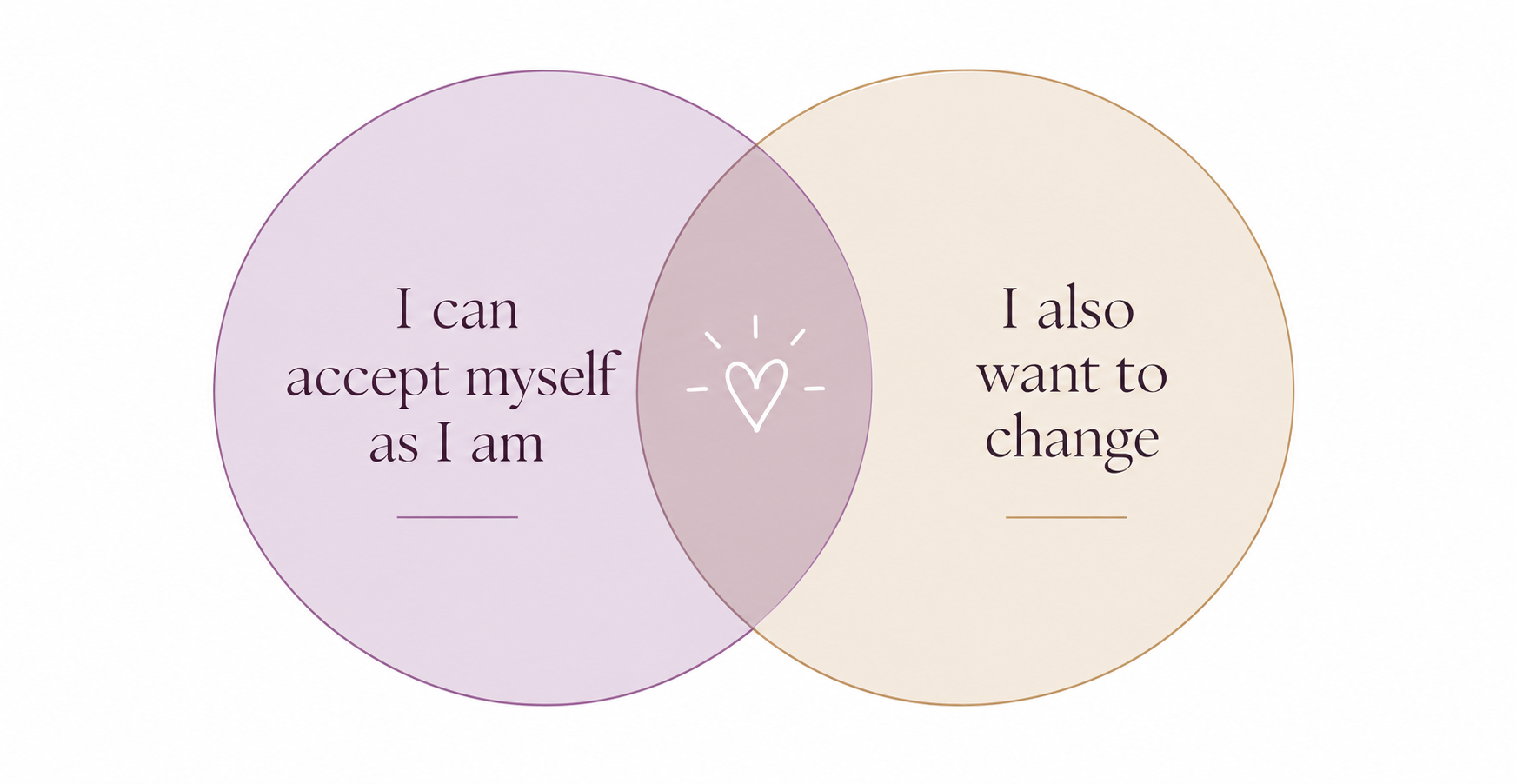
At the heart of DBT is the idea that two things can be true at the same time.
You can accept yourself as you are while also wanting to change.
You can recognise that your emotions are understandable while learning different ways to respond to them.
You can acknowledge that something is painful while believing things can improve.
This balance between acceptance and change is one of the most important principles of DBT.
Why Can Emotions Feel So Difficult to Manage?
Our emotions involve interactions between the brain, nervous system, thoughts, memories and physical sensations.
When we're stressed or feel threatened, the brain can prioritise immediate survival responses over slower, more considered thinking. This can make it harder to pause, think clearly or consider different perspectives.
You might find yourself reacting immediately, feeling unable to calm down, becoming emotionally overwhelmed or saying something that doesn't reflect what you really want.
DBT helps create more space between feeling an emotion and acting on it. The aim isn't to stop the emotion but to notice what's happening and choose how you want to respond.
What Are the Four Main Skills in DBT?
DBT focuses on four core areas that work together to help people manage emotions and navigate difficult situations.
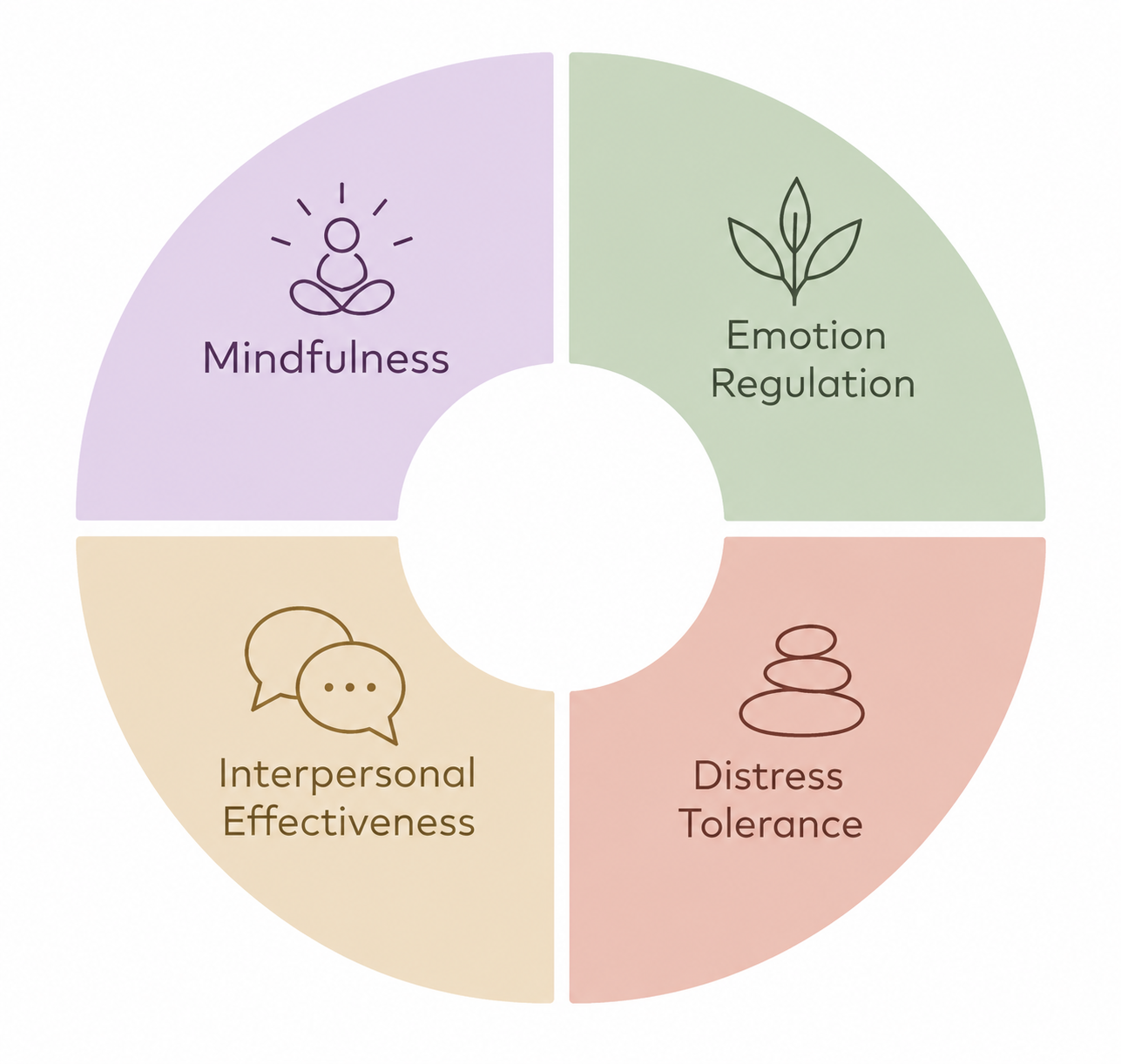
Mindfulness
Mindfulness involves noticing your thoughts, feelings and physical sensations without immediately judging or reacting to them.
Instead of thinking, "I'm anxious", you might notice, "I'm experiencing anxiety right now."
That small shift can help create some distance between you and the emotion, giving you more opportunity to decide what happens next.
Emotion Regulation
Emotions aren't necessarily the problem. Fear, sadness and anger can all communicate useful information.
Emotion regulation is about becoming better at identifying what you're feeling, recognising what triggered it and understanding what might help.
Rather than simply feeling "overwhelmed", you might begin to recognise that you're actually feeling rejected, disappointed, anxious or angry. Understanding the emotion can make it easier to respond effectively.
Distress Tolerance
Some difficult situations can't immediately be changed.
Distress tolerance helps people cope with moments of loss, uncertainty, conflict or disappointment without automatically doing something that could make the situation worse.
For example, if you receive a message that makes you angry, your first instinct might be to immediately send an angry response. DBT encourages you to pause and consider whether acting on that urge will actually help.
Acceptance is important here too. Accepting that something has happened doesn't mean approving of it. It means recognising the reality of the situation so you can decide what to do next.
Interpersonal Effectiveness
DBT also focuses on relationships.
Interpersonal effectiveness involves learning to communicate clearly, express what you need, set boundaries and manage disagreements while maintaining both relationships and your own self-respect.
These skills can be particularly useful if you find yourself avoiding difficult conversations, struggling to say no or becoming overwhelmed during conflict.
What Is the Difference Between DBT and CBT?
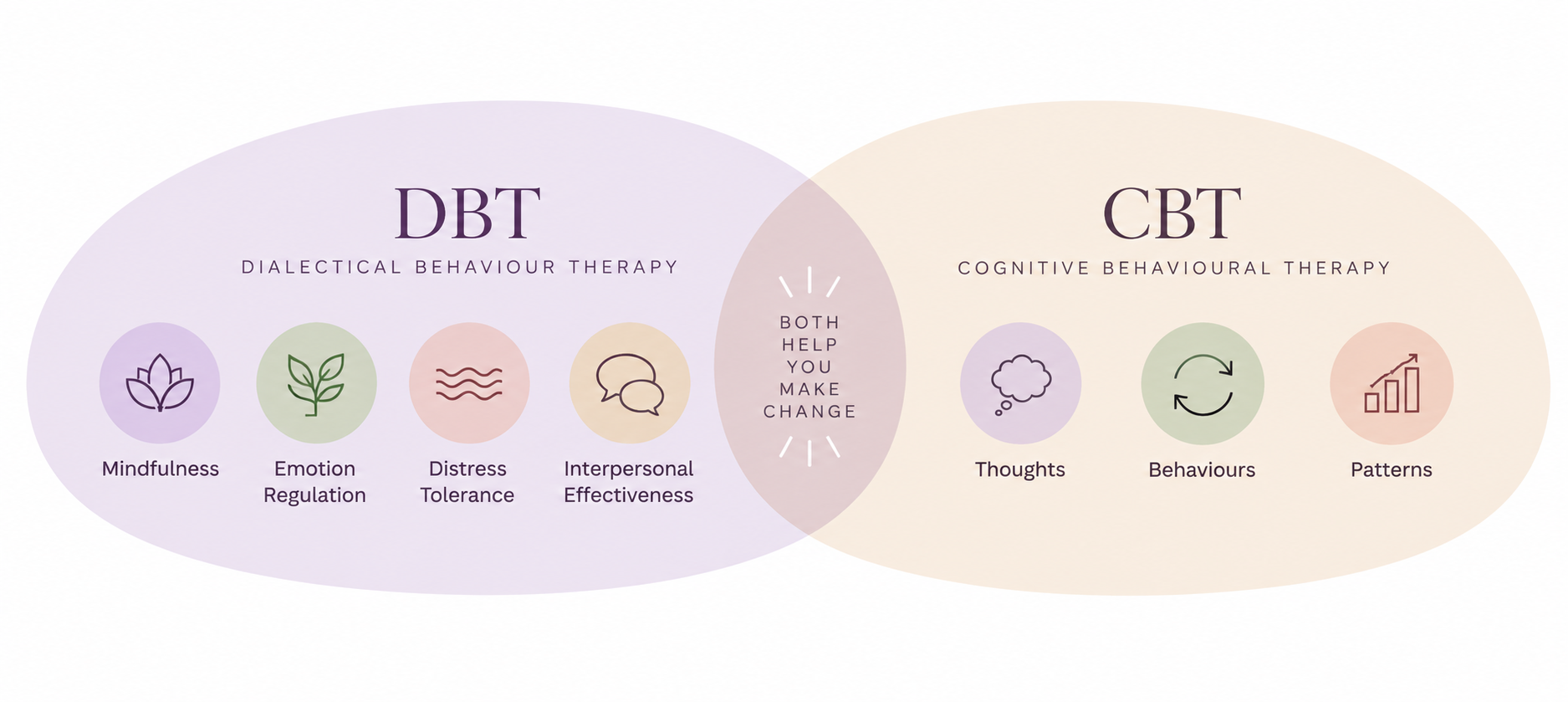
DBT and Cognitive Behavioural Therapy (CBT) are both psychological approaches and share some similarities.
CBT commonly focuses on the relationship between thoughts, feelings and behaviours. It might encourage someone to explore whether their thoughts are accurate, helpful or contributing to how they're feeling.
DBT incorporates elements of CBT but places additional emphasis on acceptance, mindfulness, emotional regulation, distress tolerance and relationships.
Rather than focusing only on changing your thinking, DBT also considers how you can accept what you're currently experiencing while learning healthier ways to respond.
Who Can DBT Help?
DBT was originally developed for people with borderline personality disorder, but DBT and DBT-informed approaches are now also used more broadly.
DBT skills may be relevant for people experiencing difficulties such as:
Emotional overwhelm
Anxiety and stress
Depression
Relationship difficulties
Difficulty setting boundaries
Impulsive behaviours
Trauma-related emotional difficulties
Difficulty understanding or managing intense emotions
DBT won't necessarily be the right approach for everyone. A qualified therapist can help you explore your individual difficulties and determine which therapeutic approach may be most appropriate.
Using DBT Skills in Everyday Life
One of the strengths of DBT is that its skills are designed to be used outside therapy.
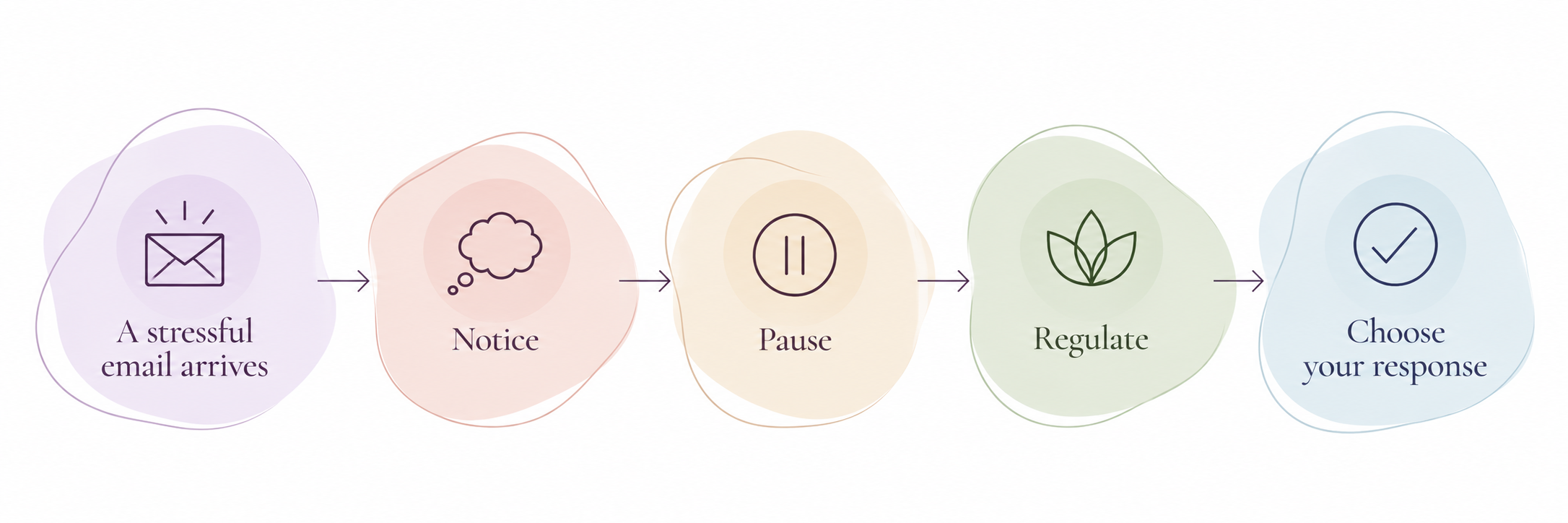
For example, imagine receiving a stressful email. Your immediate response might normally be panic, avoidance or sending an emotional reply.
DBT skills can help you notice your emotional reaction, pause, regulate yourself and then decide how you actually want to respond.
Over time, these small pauses can help you feel less controlled by immediate emotional reactions and more able to make choices that reflect what you want in the longer term.
Finding Support With DBT
DBT isn't about learning how to stop feeling. It's about understanding your emotions and developing practical ways to respond when they become difficult to manage.
At Hive Wellness, we recognise that different people benefit from different approaches to therapy. We match you with a qualified therapist based on your individual needs and preferences, rather than simply asking you to choose someone from a directory.
Whether you're struggling with emotional overwhelm, relationships, anxiety or simply want to understand your responses better, therapy can provide a space to explore what's happening and develop strategies that work for you.
If you're ready to explore your options, you can take the first step with Hive Wellness.

Get matched with a trauma specialist
Five minutes now, a match usually within 24 hours.
No pressure, no deadline.
Dr Holly Milmine
DEdPsy, MSc, MA