
We all feel exhausted sometimes. A demanding week, poor sleep or a busy period can leave you feeling drained and desperate for a break. Usually, some proper rest helps you begin to feel like yourself again.
Burnout can feel different. The exhaustion can linger even after you've rested, and it may begin to affect how you feel about work, relationships and yourself.
Knowing the difference between being tired and experiencing burnout can help you recognise when you need more than simply an early night.
What Is Burnout?
Burnout is associated with chronic stress that hasn't been successfully managed. The World Health Organization specifically describes burnout as an occupational phenomenon resulting from chronic workplace stress, rather than a medical diagnosis.
Three commonly recognised features are:
Exhaustion – persistent depletion that doesn't seem to disappear with ordinary rest.
Cynicism or emotional distance – feeling increasingly detached or negative about your work.
Reduced sense of effectiveness – feeling as though what you're doing isn't good enough or isn't making a difference.
Ordinary tiredness tends to improve when you get enough rest and recovery. With burnout, you may take time off or get more sleep but still feel depleted when you return.
Signs You Might Be Experiencing Burnout
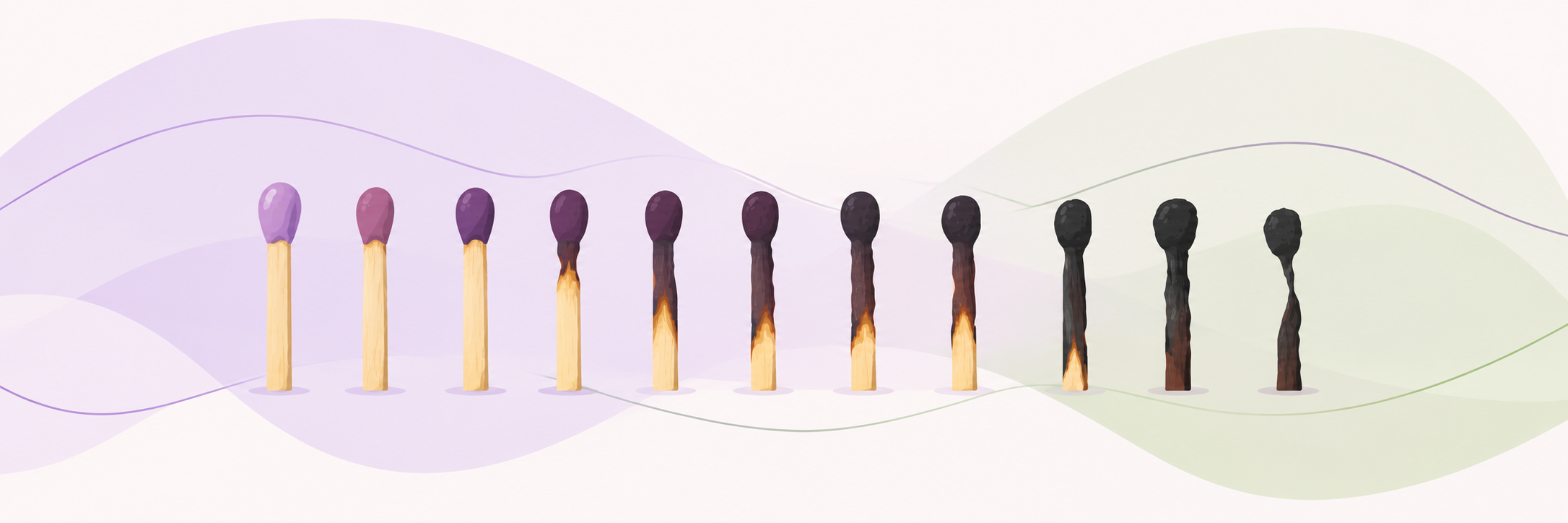
Burnout doesn't necessarily look the same for everyone, and it can develop gradually.
Some signs that it may be more than ordinary tiredness include:
Rest doesn't seem to restore your energy
Things you previously enjoyed feel less rewarding
You're becoming more irritable or emotionally distant
Your relationship with work has become increasingly negative or detached
You find it difficult to properly switch off
Your sleep no longer feels restorative
Concentrating feels much harder than usual
You're becoming increasingly self-critical
You feel physically run down
The future feels difficult to imagine positively
These feelings have continued over a sustained period
Rather than focusing on one difficult day, it's useful to consider the overall pattern and how long you've been feeling this way.
Tiredness vs Burnout: What's the Difference?
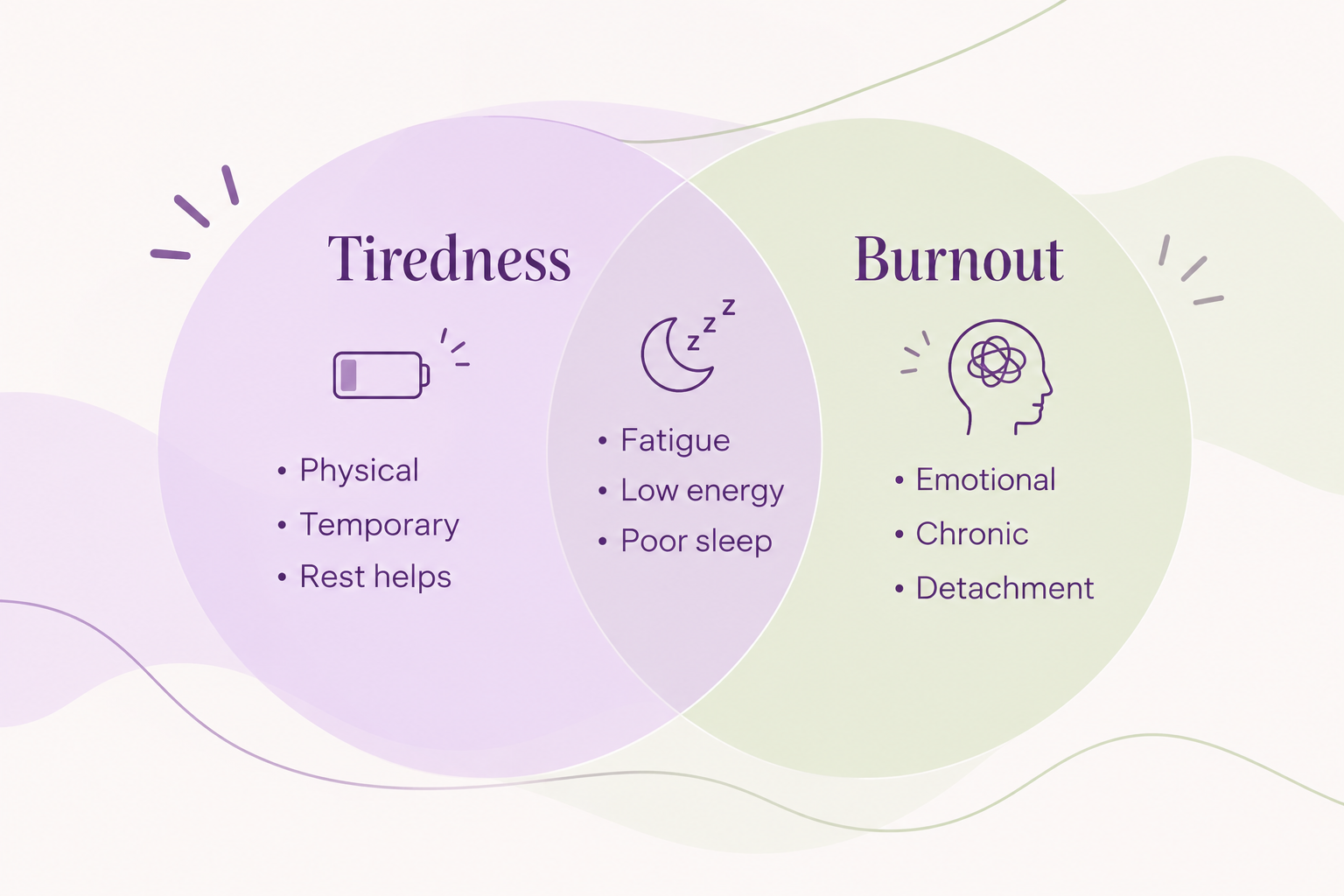
One of the simplest questions to ask yourself is: does rest actually help?
When you're ordinarily tired, taking a break, sleeping properly or having some time away from your responsibilities will usually make a noticeable difference.
With burnout, you might rest physically without feeling mentally or emotionally restored.
Another difference can be how you feel about the things around you. When you're tired, you might have less energy for work, relationships or hobbies, but you generally still care about them. Burnout can bring a greater sense of emotional distance, cynicism or flatness.
You may find yourself thinking, "What's the point?" rather than simply, "I need a break."
Burnout Can Affect More Than Your Energy
Burnout isn't only about feeling exhausted.
Long-term stress can affect concentration, sleep, mood and physical wellbeing. You might experience brain fog, struggle to focus on tasks that would normally feel straightforward or notice that you're more irritable than usual.
Some people also find that they become more self-critical. Instead of recognising that they're exhausted, they begin wondering why they aren't coping as well as everyone else.
Recognising that something has changed can be important. Burnout isn't simply about whether you can continue functioning; it's also about the cost of continuing to function in the same way.
Ask Yourself: Am I Burnt Out or Just Tired?
If you're unsure, try thinking about your experience across a few different areas.
Does rest genuinely make you feel better? Can you switch off when you're away from work or other responsibilities? Do you still enjoy things you normally look forward to? Has your sleep changed? How is your concentration? Have you become more distant or irritable with other people? And perhaps most importantly, how long has this been going on?
There isn't one question that can diagnose burnout. Looking at the pattern across your energy, emotions, relationships, work and physical wellbeing can give you a clearer picture of whether you might need more support.

What Can Help With Burnout?
Recovery isn't necessarily about taking one weekend off and then returning to exactly the same routine.
It can involve looking at what's creating or maintaining the stress in the first place and finding realistic opportunities for recovery.
That could mean reviewing your workload, establishing clearer boundaries, protecting time away from work, prioritising sleep and recovery, reconnecting with activities you enjoy or asking other people for support.
For some people, therapy can also help.
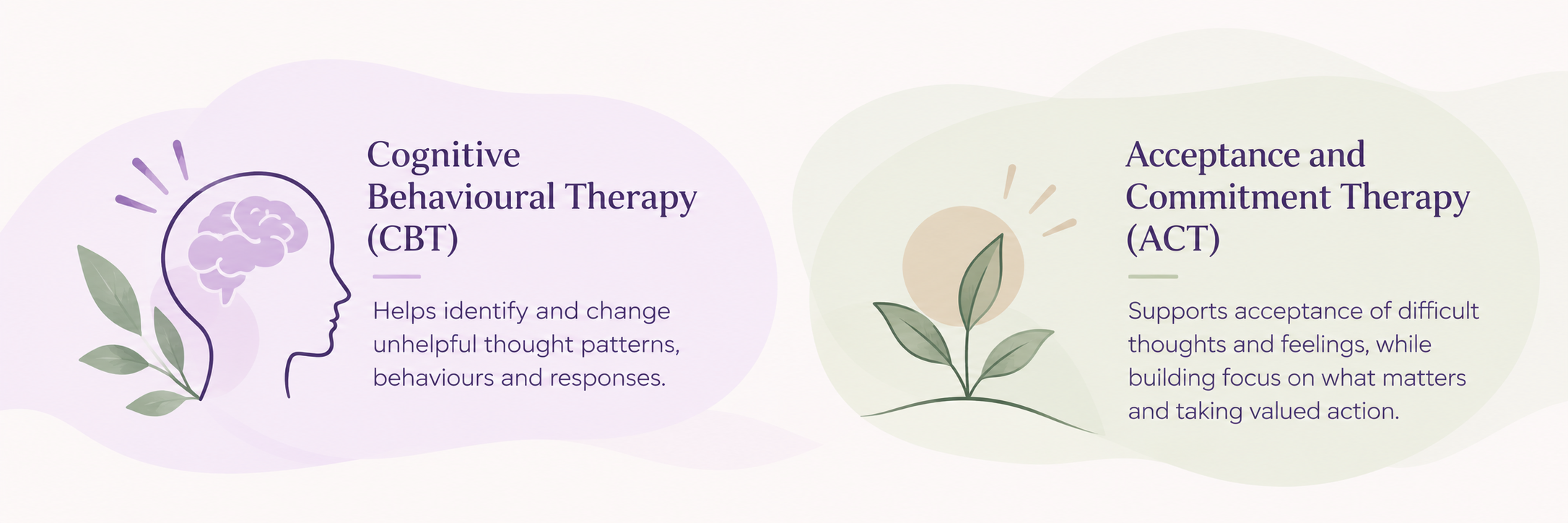
Approaches such as Cognitive Behavioural Therapy (CBT) or Acceptance and Commitment Therapy (ACT) may help you explore patterns that contribute to stress, develop healthier boundaries and find different ways of responding to pressure.
When Should You Seek Support?
You don't have to wait until you're completely unable to function before asking for help.
If exhaustion is persistent, you're finding it increasingly difficult to cope, or stress is beginning to affect your mood, relationships, physical wellbeing or ability to function day-to-day, it may be worth speaking to a healthcare professional or therapist.
At Hive Wellness, we match you with a qualified therapist based on your individual needs and preferences. Therapy can give you space to understand what's contributing to the way you're feeling and work out what needs to change.
Burnout can build gradually, and recovery can take time too. Recognising that you're struggling can be an important first step towards doing something differently.

Get matched with a trauma specialist
Five minutes now, a match usually within 24 hours.
No pressure, no deadline.
Dr Holly Milmine
DEdPsy, MSc, MA